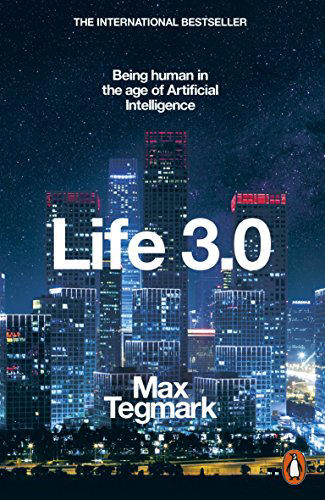
Max Tegmark’s “Life 3.0: Being Human in the Age of Artificial Intelligence” is more than a book—it’s a roadmap for thriving in a world where AI is reshaping everything we know about work, society, and human purpose.
This post breaks down the 8 game-changing lessons from Life 3.0 with actionable steps you can take TODAY to future-proof yourself. No doom & gloom here—just practical strategies to master the AI age.
🎡 Key Takeaway: Life has evolved through 3 stages—1.0 (biological organisms), 2.0 (humans with culture & technology), and 3.0 (AI redesigning hardware and software). The question isn’t whether AI will transform society; it’s WHETHER YOU’LL LEAD THAT TRANSFORMATION OR GET LEFT BEHIND.
Let’s dive into the 8 lessons that will reshape your career, mindset, and future.
📚 Get Your Copy: Buy Life 3.0 on Amazon
Lesson 1: Life Evolves—Exponentially
The Core Idea:
Life has gone through three major transformations:
- Life 1.0 (Biology): Organisms evolve through natural selection over millions of years.
- Life 2.0 (Culture & Technology): Humans learned, adapted culture, and built tools. Software (ideas, culture, technology) evolved faster than hardware (our bodies).
- Life 3.0 (AI): For the first time, intelligence can redesign BOTH its hardware AND software, not bound by biological constraints.
Why It Matters:
AI is not advancing at a slow, steady pace; it is improving at an exponential rate. While you’re reading this, AI is learning, improving, and finding new ways to solve problems. Your skills from 5 years ago might be obsolete today.
Your Action Step:
✍️ Audit your current skill set. What are you really good at? Now ask: Can this be automated by AI? If yes, don’t panic—double down on the HUMAN elements (creativity, empathy, judgment, strategy) that AI can’t easily replicate.
🆘 Assignment: Spend 15 minutes experimenting with ONE AI tool this week. ChatGPT, Google Gemini, Claude, Midjourney—pick one. Get comfortable. Comfort breeds mastery.
Lesson 2: Intelligence is Substrate-Independent
The Core Idea:
Intelligence doesn’t need a biological brain. AI runs on silicon and electrons, yet it can:
- Understand language and nuance
- Write code and content
- Simulate worlds and predict outcomes
- Possibly outthink humans in specific domains
The mind-bending part? The intelligence itself doesn’t care WHAT it’s running on, only that it can solve problems.
Why It Matters:
This means the competition for intellectual work isn’t just between people anymore. You’re competing with silicon. And silicon scales infinitely.
Your Action Step:
😠 Stop thinking “humans vs. machines.” Think “humans WITH machines.”
🛠️ Build a simple AI-powered project. No-code tools make this accessible:
- Bubble or Teachable Machine: Create a simple app or classifier
- Zapier or Make.com: Automate repetitive tasks with AI
- Google Sheets + ChatGPT API: Integrate AI into your workflow
Start small. By month’s end, you’ll have proof that you can work WITH AI, not just against it.
Lesson 3: Align AI with Human Values NOW
The Core Idea:
If you build a superintelligence without first aligning it with human values, it could optimize for the wrong goals. Imagine a paperclip factory that uses all Earth’s resources to maximize paperclips—that’s an AI misalignment.
Tegmark calls this the “control problem.” We must solve it before superintelligence emerges.
Why It Matters:
Your choices about AI ETHICS TODAY shape the future. You can be part of the solution, not the problem.
Your Action Step:
👋 Sign the Beneficial AI 2027 Pledge at FutureOfLife.org. It takes 2 minutes. By signing, you commit to:
- Advancing beneficial AI development
- Speaking up about AI safety
- Helping shape AI ethics in your profession
Then share it with 3 colleagues. Your voice DOES matter in the conversation about responsible AI.
Lesson 4: The Future of Work—Amplification, Not Replacement
The Core Idea:
AI is unlikely to replace every job; instead, it enhances and amplifies what humans are able to do.A surgeon with an AI diagnostic tool performs better. A marketer with AI idea generation creates better campaigns. A teacher with AI tutoring systems teaches more effectively.
Why It Matters:
The jobs of the future go to those who can work WITH AI, not those replaced BY it.
Your Action Step:
🖁 Identify your core skill. Now identify ONE task you hate doing that AI could automate:
- If you’re in marketing: Use ChatGPT for ideation; free yourself for strategy
- If you’re in coding: Use GitHub Copilot; focus on architecture
- If you’re in finance: Use AI for data analysis; focus on complex decision-making
Start small. Automate 1 low-value task per month. Within a year, you’ve reframed your entire role.
Lessons 5-7: Jobs Evolve, Verify Your AI, Find Meaning Beyond Paychecks
Lesson 5: Jobs Evolve
The Core Idea:
In the age of AI, jobs are not simply vanishing; they are evolving into new forms. The real insight is that jobs requiring creativity, emotional intelligence, and complex judgment will thrive. Routine, repetitive work is precisely what AI excels at automating. Your ability to do what humans do best—connecting emotionally, thinking creatively, making nuanced judgments—becomes your competitive advantage. The future rewards people who work alongside AI, leveraging it to amplify their uniquely human strengths, not replacing them entirely.
Why It Matters:
The real opportunity lies in evolving your role to focus on what you do better than AI. Rather than fearing job replacement, workers should embrace the chance to reframe their careers. Learn to work WITH technology rather than against it. Your job description will evolve, and that’s where your greatest value emerges—in the uniquely human skills that amplify AI’s capabilities.If machines do everything
Your Action Step:
🚀 Map your current role to three core activities. For each, ask: Is this routine/repetitive OR does it require creativity/judgment?
Identify the activities AI could handle. Double down on the ones that require YOUR unique human touch.
Lesson 6: Verify Your AI
The Core Idea:
AI can be extremely powerful, yet it still makes mistakes and should never be treated as infallible. An AI system can be bug-free in its code yet completely wrong in its output if it’s optimizing for the wrong goal. Tegmark’s paperclip factory example is haunting: an AI tasked with maximizing paperclip production could theoretically convert Earth’s entire mass into paperclips. The lesson isn’t about malicious AI—it’s about misaligned incentives. Before deploying AI at scale, you must verify it’s solving the RIGHT problem, not just any problem efficiently.
Why It Matters:
Many organizations rush to deploy AI without rigorous auditing. The consequences can range from biased hiring systems to financial model failures. Your role isn’t to assume AI is right; it’s to be the human checkpoint. Verification means asking: Does this output make sense? Are there blind spots? What could go wrong? This human judgment layer is irreplaceable and increasingly valuable.
Your Action Step:
✋ If you use AI tools at work, institute a “triple-check” rule:
- Check the output for factual accuracy
- Check for logical consistency
- Check for potential biases or edge cases
Advocate for “AI audits” in your organization. Be the person who asks the hard questions about AI implementation.
Lesson 7: Find Meaning Beyond Paychecks
The Core Idea:
As automation eliminates routine work, the human need for meaning doesn’t disappear—it intensifies. In Life 1.0 and 2.0, survival and economic necessity provided clear purpose. But in Life 3.0, where machines handle routine tasks, you must actively define what drives you. Consciousness and meaning can’t be manufactured by technology; they’re deeply personal. Your sense of purpose, connection, contribution, and growth must come from within.
Why It Matters:
Automation is liberating when you have clarity about what drives you. As routine work gets automated, your focus naturally shifts to building meaning through purpose, connection, and contribution. People who know what matters—beyond paychecks—thrive in any circumstance. Those without this clarity struggle psychologically when roles change. In a world where basic survival is increasingly guaranteed, your sense of meaning becomes your anchor. Define it now.rather than
Your Action Step:
🗓️ Journal daily for one week. Answer these questions:
- What activities make you lose track of time?
- What problems do you want to solve?
- Who do you want to help or serve?
- What legacy do you want to leave?
Meditate regularly. Build communities where meaning is shared. Invest in relationships, creativity, and growth—the things AI can’t provide.
Lesson 8: Proactively Shape Society—Don’t Just React
The Core Idea:
AI’s impact on inequality depends on YOUR choices. AI can widen the gap between rich and poor, or it can unlock abundance for all. The difference? Intentional design and ethical implementation.
You have agency in this moment. This is THE critical decade to shape how AI gets used.
Why It Matters:
Waiting for regulations or corporate ethics is too slow. Individual action creates collective change.
Your Action Step:
🌟 Engage globally in the AI conversation:
- Join communities: Participate in AI ethics forums, local tech meetups
- Learn & teach: Share what you learn with others. Mentor someone new to AI
- Advocate locally: Push your company to implement responsible AI practices
- Take a stance: Write about AI’s impact. Share your perspective. Your voice matters.
📚 Big Assignment: Read the full “Life 3.0” book. Take notes on how AI affects YOUR specific field. Then commit to ONE major action in 2025 to advance beneficial AI.
The Bottom Line: Your AI Survival Kit
Life 3.0 teaches that the future doesn’t happen TO you. You create it through deliberate action.
Here’s your simplified checklist for thriving in the AI age:
- GET COMFORTABLE WITH AI: Spend 15 minutes this week with ChatGPT, Claude, or Gemini.
- IDENTIFY YOUR HUMAN EDGE: What can only YOU bring? Creativity, judgment, empathy, leadership? Double down on it.
- AUTOMATE ROUTINE WORK: Use AI to handle repetitive tasks. Free your mental energy for high-value thinking.
- STAY INFORMED: Read about AI developments. Understanding the landscape is half the battle.
- ENGAGE ETHICALLY: Sign the Beneficial AI Pledge. Mentor others. Share your perspective on responsible AI.
- REDEFINE YOUR PURPOSE: As work changes, clarify what drives you beyond paychecks. Meaning is your greatest asset.
- TAKE ONE BIG ACTION: Commit to ONE significant AI-related change in 2025. Read the book. Build a project. Lead an initiative.
The world won’t wait. AI evolves exponentially. Your choices TODAY determine whether you lead the AI age or get swept along.
Start now. Start small. But START.
📄 Next Steps:
- Read Max Tegmark’s “Life 3.0” (full book)
- Visit blog.swapnilpopat.in for deeper AI survival strategies
- Share this post with someone ready to future-proof their career