
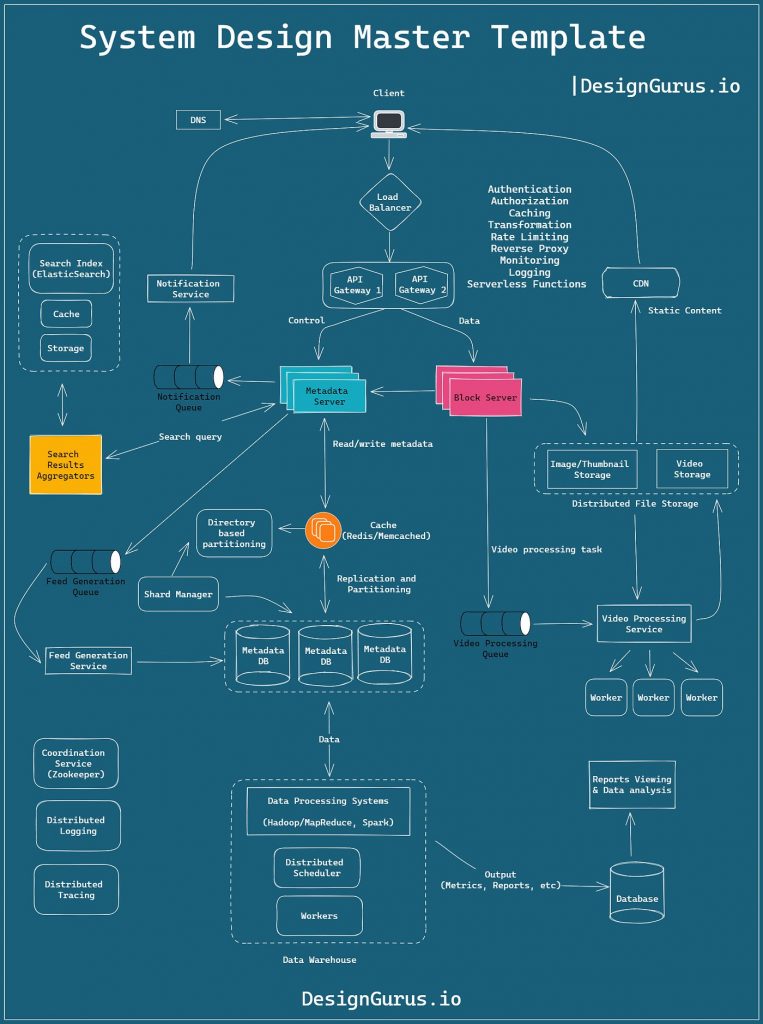
Welcome! Ever wondered how giants like Netflix or Google handle millions of users without a hitch? The answer lies in system design—the blueprint that keeps tech systems running smoothly, even under pressure. As a solutions architect, I’m here to break down 16 key concepts in a way that’s easy to grasp, whether you’re new to tech or looking to level up. Let’s dive in!
What’s System Design?
Think of system design as the architectural plan for a house. It ensures your website, app, or service can handle growth, stay secure, and recover from hiccups. Below, I’ll explain the 16 must-know concepts with simple examples.
- Domain Name System (DNS)
DNS is like the internet’s phonebook. When you type “google.com,” DNS translates it into a numeric address (IP) that computers understand, helping you reach the right site. - Load Balancer
Imagine a busy restaurant with one waiter. A load balancer is like adding more waiters to split the crowd, directing users to different servers to avoid overload. - API Gateway
This is the front desk of an app. It takes your request (e.g., booking a ride), processes it, and sends it to the right team (services), then combines the answers for a smooth experience. - CDN (Content Delivery Network)
Think of a CDN as a global network of warehouses. It stores copies of your website’s content (like images) closer to users, so they load faster—perfect for streaming videos worldwide. - Forward Proxy vs. Reverse Proxy
- A reverse proxy acts as a gatekeeper, receiving requests and passing them to the right server, like a receptionist at a company.
- A forward proxy is like a personal assistant who fetches web pages for you, hiding your location.
- Caching
Caching is like keeping your favorite book on your nightstand. It stores frequently used data (e.g., search results) in a fast memory, so you don’t have to look it up every time. - Data Partitioning
This is splitting a big database into smaller chunks, like dividing a library into sections (fiction, non-fiction) to make it easier to find books. - Database Replication
Replication is like having backup copies of a book. It creates duplicate databases so if one fails, others keep the system running. - Distributed Messaging Systems
Think of this as a postal service for apps. It delivers messages (data) between different parts of a system, ensuring everyone stays updated—like notifying all store branches of a sale. - Microservices
This is breaking a big app into smaller, independent pieces. Imagine a car factory where the engine, wheels, and body are built separately but come together perfectly. - NoSQL Databases
Unlike traditional databases (like a filing cabinet), NoSQL is flexible storage for unstructured data, like a digital notebook for photos or social media posts. - Database Index
An index is like a book’s table of contents. It helps find data quickly by pointing to the right page, speeding up searches. - Distributed File Systems
This is a shared storage system across multiple computers, like a cloud drive where you and your team store files and access them anywhere. - Notification System
Think of this as a reminder app. It sends alerts (e.g., email or push notifications) to users when something happens, like a sale or a friend’s message. - Full-Text Search
This is like a super-smart search engine. It scans entire documents to find keywords, helping you locate that recipe buried in a blog post. - Distributed Coordination Services
This is the team leader for multiple servers. It ensures they work together, like a conductor keeping an orchestra in sync.
- Why It Matters
In 2025’s tech boom, with AI and cloud growth, systems must scale. Imagine an online store during a sale—without these concepts, it could crash. Proper design ensures speed, reliability, and growth. - A Real-World Example
Say your blog goes viral. A load balancer spreads readers across servers, caching keeps posts fast, and replication keeps it live if one server fails. That’s system design in action! - Get Started
Try designing a simple system—like a to-do app with a load balancer and caching. Start small, experiment, and build toward creating tech that powers the future. Whether you’re a beginner or aspiring engineer, these basics are your foundation.
Let’s create something amazing! Share your thoughts in the comments—I’d love to hear your ideas.
Want to stay updated with more tech insights? Follow me for the latest tips and trends!
- Instagram: https://www.instagram.com/swapnilpopat/
- Threads: https://www.threads.com/swapnilpopat/
- LinkedIn: https://www.linkedin.com/in/swapnilpopat/
- X: https://x.com/swapnilpopat/
Let’s connect and build something great together!