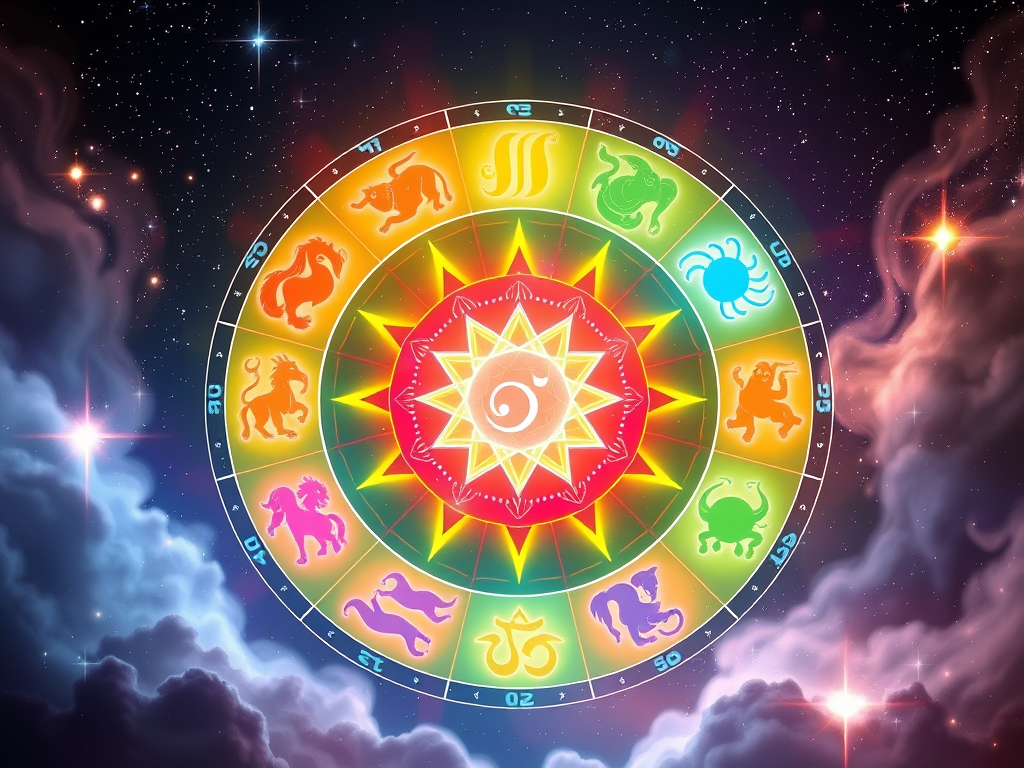
Most people look at ancient astrological texts and see a system of predictive fatalism, rituals, and gemstones. But if you read the source material—the Puranas, the Itihasas, and the mythological frameworks upon which Vedic astrology was built—a very different reality emerges.
These texts rarely prescribe a stone, a donation, or a mantra as the first intervention for a systemic life problem. Instead, they prescribe a change in behaviour.
The ancient stories were not designed as mere entertainment, nor were they meant to be read as literal history. They were sophisticated behavioural manuals encoded in narrative form. They mapped human psychology, leadership failures, and operational breakdowns to planetary archetypes, offering practical protocols for correcting them.
When you strip away the mysticism, what remains is a highly pragmatic system of cognitive and behavioural engineering. Every “planet” represents a specific psychological or operational state. And according to the texts, these states respond to behaviour first.
Here is how those ancient behavioural protocols translate into practice.
The Sun (Surya): The Alignment of Word and Action
In the Puranic tradition, King Harishchandra belonged to the Surya (Solar) dynasty. He was known across all three worlds for a single, unbending quality: he never spoke an untruth.
When Rishi Vishwamitra tested him, it was not with mere temptation. It was a complete dismantling of his reality. Harishchandra was stripped of his kingdom, his wealth, and his status. His wife was sold into servitude. He found himself working as a menial labourer at a cremation ground. When his wife arrived carrying the body of their dead son, lacking the money for the cremation fee, Harishchandra still collected the tax required by his duty. Even in the absolute depths of human suffering, his word did not break.
The gods restored his kingdom not because he performed a ritual, but because they witnessed an absolute, unbroken alignment between his words and his actions, regardless of the external cost.
The Systemic Principle
The Sun represents the core executive function—the authentic self, leadership, and authority. In any organisation or individual life, authority weakens in direct proportion to the gap between what is said and what is done. When promises are made lightly, or when the face shown to the market differs from internal operational reality, the core foundation rots. The “Sun” dims.
The Behavioural Protocol
Do not say anything that fails to match internal reality. If the answer is no, say no. If a commitment cannot be met given your current bandwidth, do not make it. If an apology is owed, deliver it directly without defensive decoration.
Every time a word matches an action, your internal authority solidifies. Harishchandra did not recite hymns to get his life back; he simply refused to let his speech and his actions become two different things.
The Moon (Chandra): Focus and Foundational Stability
Chandra Dev was married to the 27 Nakshatras (constellations), all daughters of Daksha Prajapati. The agreement was equal attention. However, Chandra had a favourite: Rohini. He spent most of his time with her, funnelling the attention promised to all 27 toward just one.
The neglected wives went to their father in grief. Daksha warned Chandra to honour his existing commitments. Chandra agreed, but repeatedly fell back into the same pattern. Finally, Daksha cursed him: his light would begin to disappear. The Moon began waning, saved from complete destruction only by Shiva’s intervention. The original pattern of neglecting existing bonds for a preferred one was never fully corrected, which is why the Moon waxes and wanes perpetually.
The Systemic Principle
The Moon governs mental peace, emotional stability, and foundational relationships. In a professional context, this is the classic failure mode of taking the core business for granted while chasing a shiny new object. We often direct our best energy toward acquiring new clients, new hires, or new social connections, while giving the people who keep the lights on—core family, legacy clients, steady employees—our leftover, exhausted attention.
The Behavioural Protocol
Give complete, undivided attention to the foundational people and systems already in your life before seeking new stimulation. Sit with your core family members daily with zero distractions. In a business context, dedicate focused time to your oldest, most reliable clients or team members without an agenda. The system strengthens through the quality of attention given to existing bonds.
Mars (Mangal): The Architecture of Aggression
When Ravana’s soldiers set Hanuman’s tail on fire in the Ramayana, the intention was psychological destruction. They wanted to humiliate the messenger, send him back broken, and make him feel powerless.
What followed is perhaps the most precise teaching on the management of aggression in Indian literature. Hanuman did not panic. He did not retaliate blindly in rage. Instead, he expanded his body, broke his restraints, and used the very fire meant to destroy him as a deliberate, strategic tool. He burned Lanka house by house, with complete purpose and zero chaos.
The Sundara Kanda notes that Hanuman paused before each structure, assessed its strategic value, and made calculated decisions about what to burn and what to spare. The fire was burning the entire time, but his decisions remained entirely cold.
The Systemic Principle
Mars is not inherently about anger; it is about energy, physical strength, and the capacity to execute. A troubled execution capability shows up in two ways: either as destructive, poorly directed rage, or as absolute passivity when action is required. Both are the same energy, badly managed. Hanuman’s story does not teach the suppression of anger. It teaches the channelling of friction.
The Behavioural Protocol
Whenever genuine anger or intense frustration arises, give it a physical outlet before giving it a verbal or decision-making one. Engage in intense physical exertion—a fast walk, lifting weights, or any bodily movement—for at least twenty minutes before speaking or sending that email.
This is not avoidance. It is routing the energy through the hardware first, allowing you to make strategic decisions rather than reactive ones.
Mercury (Budh): The Humility of Intelligence
Narada Muni once defeated a severe test of temptation. Overjoyed, he immediately went to Vishnu to report his victory, announcing, “I have conquered desire. I am like you.” Vishnu smiled and said nothing.
Vishnu then arranged an illusion: a beautiful city, a wise king, and a princess selecting a husband at a swayamvara. Narada fell completely in love. Believing his own intellect and spiritual merit deserved the prize, he asked Vishnu for a face like Vishnu’s own to ensure he would be chosen. Vishnu secretly gave him the face of a monkey.
Narada attended the ceremony with absolute, unearned confidence. The princess ignored him. Only when he saw his reflection in the water did he realise what had happened. His pride shattered.
The Systemic Principle
Mercury rules the intellect, analytical ability, and communication. But intelligence without humility creates a deadly trap: the certainty that your current understanding is complete. The smartest person in the room is often the most vulnerable to the blind spots their own intelligence creates. Narada was genuinely accomplished; his failure was the assumption that his accomplishment made him immune to ordinary human failure.
The Behavioural Protocol
Before giving advice or making a definitive ruling on a complex issue, explicitly identify what information might still be missing. For every area where you hold a strong personal conviction, deliberately seek out one sincere, well-reasoned opposing view and engage with it honestly. Wisdom begins at the exact point where intellectual certainty ends.
Jupiter (Brihaspati): The Application of Existing Knowledge
Brihaspati was the guru to the Devas. The Devas possessed every advantage: abundance, divine weapons, and the greatest teacher in existence. Because they had everything, they began treating the extraordinary as ordinary.
They started arriving late to Brihaspati’s teachings. They grew distracted. Eventually, Indra himself failed to rise and offer the appropriate respect when Brihaspati entered the room. It was not deliberate malice; it was the casualness of deep comfort.
Brihaspati noticed, said nothing, and simply disappeared.
The Devas carried on, assuming their accumulated power would sustain them. It did not. The Asuras, operating under the strict discipline of their own guru, Shukracharya, began winning every battle. Power without wisdom always defeats itself.
The Systemic Principle
Jupiter governs wisdom, expansion, and judgement. When individuals or organisations stall, the failure is rarely a lack of new information. It is the failure to apply what is already known. We buy another book, hire another consultant, or take another course, while entirely ignoring the foundational advice we received years ago.
The Behavioural Protocol
Stop acquiring new frameworks. Identify one piece of wisdom you have already received—from a mentor, a difficult life experience, or a defining book—that you have not yet fully acted upon. Take that single, known principle and practice it deliberately for one month. The system expands through the application of existing wisdom, not the endless accumulation of data.
Venus (Shukra): Gratitude and the Retention of Value
The Vishnu Purana details how Devraj Indra received a rare, divine garland from Maharishi Durvasa. Drunk on his own status, Indra casually placed it on his elephant’s head. The elephant pulled it down and trampled it.
Durvasa’s eyes turned red, and he cursed Indra: Lakshmi (prosperity) would immediately leave his palace.
Instantly, the wealth remained, but the value evaporated. The food lost its flavour. The gold lost its warmth. The kingdom lost its harmony. The text is explicit: Lakshmi does not stay where the mind is unsteady and ungrateful. Prosperity only returned when the Devas surrendered their ego and performed the Samudra Manthan (churning of the ocean) with complete humility.
The Systemic Principle
Venus is the archetype of taste, beauty, design, and harmony. You can build a highly profitable business or amass personal wealth, but if the culture is toxic and the environment lacks basic appreciation, the wealth feels sterile. Money without gratitude is merely a number on a screen; it provides no actual warmth.
The Behavioural Protocol
Ground yourself in daily, specific appreciation. Each night, recall three precise things from the day that carried beauty or comfort. Not sweeping victories, but granular realities: a well-made cup of coffee, a difficult problem solved cleanly, a quiet moment of focus. Quality of life responds to the attention given to existing beauty, not just the pursuit of future milestones.
Saturn (Shani): Integrity Under Constraint
King Vikramaditya was the definitive ruler of his era, famous for his justice. Then his Sade Sati (the 7.5-year transit of Saturn) began.
He lost his kingdom, his wealth, and his identity. He ended up in a foreign land, working in an oil-presser’s mill, driving a bull in endless circles. A man who had governed a civilisation was now doing the most repetitive, unglamorous physical labour imaginable, completely unrecognised.
Later, through a series of false accusations, his hands were cut off. He was a king with no kingdom, no identity, and no hands.
Yet, Vikramaditya did not seek revenge. He did not look for a shortcut out of his reality. He continued to fulfil his duties within those severe constraints without compromising his character. When the period ended, Shani appeared and stated that no one had ever passed the test so completely.
The Systemic Principle
Saturn governs time, operational discipline, and the hard reality of cause and effect. It tests what you do when the environment removes all rewards. In a professional context, this is the reality of doing the boring, unglamorous maintenance work. It is the documentation, the compliance checks, the difficult conversations.
The Behavioural Protocol
Identify the single most avoided duty in your daily life. It is the operational task you know is critical but consistently delay—a financial audit, a difficult performance review, or a health check. Begin that avoided duty today. Do not demand perfect conditions. Simply start doing the unglamorous work and do not stop. Progress here relies entirely on sincere effort in the face of friction.
Rahu: The Cost of False Positioning
During the churning of the ocean, the Asura Svarbhanu disguised himself as a Deva to drink the nectar of immortality. For a brief moment, the hack worked. He blended in, sat between the Sun and Moon, and drank.
Then he was recognised. Vishnu’s discus severed his head. Svarbhanu gained immortality, but at the cost of permanent fragmentation. The head became Rahu, eternally separated from the body (Ketu). Rahu spends eternity chasing the Sun and Moon to punish them for exposing him, creating eclipses, but he can never hold them.
The shortcut worked for a second; the consequence lasted forever.
The Systemic Principle
Rahu represents the gap between internal reality and external presentation. In the modern economy, this is the inflated resume, the exaggerated startup metrics, the false positioning of expertise. The disguise might win the funding or the job, but it forces you into a state of permanent, exhausting performance. You spend all your energy defending a facade rather than building actual competence.
The Behavioural Protocol
Audit your life for false positioning. Identify one area where the version of yourself you present to the market significantly exceeds your actual capability. Begin reducing that gap through honest disclosure or dedicated upskilling. The energy you waste maintaining an illusion is exactly the energy required to achieve genuine mastery.
Ketu: Deep Disconnection
When Svarbhanu was severed, the body became Ketu. It has no head. It possesses no thinking, planning, or desiring mind. It is simply accumulated experience without the mechanism for generating new anxieties.
While commonly viewed as a difficult placement, ancient texts consider Ketu the ultimate marker of spiritual advancement. It represents the state of operating without the constant, exhausting commentary of the ego. It is the capacity to simply exist and observe.
The Systemic Principle
Ketu is deep focus. It is the ability to detach from the noise of the market and the constant demands for your attention. True clarity does not come from adding more information; it comes from ruthless subtraction.
The Behavioural Protocol
Implement one hour of absolute, unmediated disconnection every day. No phone, no music, no podcasts, no conversation. Simply walk or sit without any external input. This is not a formal meditation practice; it is giving your brain the space to exist without an incoming data stream. True insight usually arrives in the vacuum created by silence.
Every archetype in these ancient texts is watching a specific human behaviour. They map how we handle our words, our anger, our duties, and our attention.
These are not metaphors. They are operational technologies, documented by observers who understood a fundamental truth: the environment does not change the person; the person’s behaviour changes the environment. The stories contain the frameworks. The frameworks require action.
The behaviour is the actual remedy.